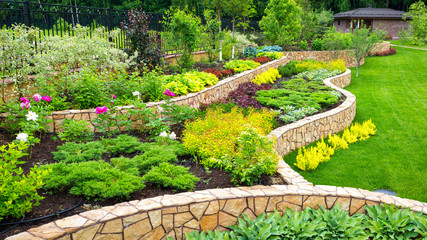
Landscape Designers Honolulu HI provide planning, design and direction on both hardscape and softscape projects. They can design, create and implement large, commercial or residential landscapes.
They are also responsible for conducting research and investigations. Those considering this career should seek out an accredited program that offers a combination of education, practical experience and hands-on training.
Education
As with any field, education and training are key. Landscape architects are required to obtain a bachelor’s or master’s degree in landscape architecture. This curriculum should include courses in horticulture, design and technology, math, and physics. Students should also take elective courses in subjects such as art and history to enhance their creativity and communication skills, both of which are essential in the profession.
After earning a degree, prospective landscape architects should gain experience through internships or by working for licensed landscape architects. In addition, landscape designers must build a portfolio of their best work to showcase their skills and expertise.
To become licensed, many states require landscape architects to pass a national exam called the Landscape Architect Registration Examination (LARE). Some also have a title act that requires those seeking licensure to work under the supervision of an experienced licensed landscape architect for a period of time.
Landscape architects typically work in a wide range of sectors, including public parks, commercial buildings, and urban spaces. They can also choose to specialize in areas such as conservation, restoration, historic preservation, or environmental planning. They may even choose to focus on specific aspects of landscape construction, such as site planning, layout of circulation patterns, grading and drainage plans, and planting designs.
For those interested in entering the profession, it is recommended that students seek out accredited programs from the American Society of Landscape Architects. The LAAB accredits educational programs that lead to first professional degrees at the undergraduate and graduate levels in the United States. Students can find an accredited program by searching online or contacting their local ASLA chapter for a list of approved schools.
Those who would like to learn more about the profession can also read books on landscaping. A quick online search will uncover a treasure trove of expert advice on everything from design basics to specialty plant care. Another great way to gain a better understanding of the industry is to simply observe nature. Take the time to visit parks and gardens, noting how plants are arranged and how they are used for aesthetic appeal.
Training
There are a number of differences between a Landscape Designer and a Landscape Architect. These include education requirements, training procedures and the types of projects each professional works on. While both have a similar skill set, their distinctions allow each to cover different projects.
The most significant difference between the two is that a Landscape Architect requires a bachelor’s degree in Landscape Architecture, and they must also be licensed. A Landscape Architect can be employed by a design firm or can start their own independent practice. However, it is recommended that those looking to become a Landscape Architect complete a four-year college degree program and take part in internships with established landscape architects.
A Landscape Designer, on the other hand, may have a more flexible educational path and can pursue a two-year associate’s degree in horticulture or a related field. Regardless of the education path taken, it is recommended that Landscape Designers obtain a CAD certification to ensure that they can produce construction-ready plans for their projects.
Landscape architects must have a thorough understanding of site planning, which includes assessing topography, property lines and existing buildings and utilities. They must be able to use this information to create efficient, functional and appealing outdoor spaces. A qualified landscape architect must also be able to design a space that is sustainable and environmentally responsible, including using rainwater for irrigation and creating green infrastructure.
Both Landscape Architects and Landscape Designers must be able to meet with clients to discuss their designs, understand the requirements of their sites and make changes as necessary. They also have to work with various industry software to convert their client’s vision into a plan that can be built. Additionally, both professionals must be able to work on large-scale commercial projects and public gardens.
Because Landscape Architects have a greater level of education and are licensed, they are also held to higher standards when it comes to professional conduct. For example, the Department and the State Board of Landscape Architecture views some titles or derivations as inappropriate, such as “Vice President,” conferred on an unlicensed person.
Licensing
Landscape designers balance a schedule of site visits, client meetings, presentations, office work, and research. They strive to create environments that are beautiful and functional, whether a small backyard or a large public park. Creating these outdoor rooms involves a unique blend of horticultural science, spatial organization, and artful composition.
The process of designing a space may start with a simple sketch and continue through detailed plans using computer software. Then, the landscape designer will create a presentation to show the client what the final product will look like and make any necessary adjustments. Once the plans are approved by the client, the landscape designer will work with the contractors to ensure that they understand the design details. This will include providing a list of materials needed and specific plant selections. Landscape designers are also responsible for educating their clients on the maintenance and care of the garden.
When a client wants to change a part of the landscape, the landscape designer will consider how this will impact the surrounding areas. This is called phasing. For example, if a client wants to remove an existing shrub, the landscape designer will determine how this will impact the surrounding plants and plan accordingly. This will help to prevent the loss of important elements and ensure that the client’s goals are met.
Creating visual contrast in a design is an effective way to draw attention to certain features. This can be done through contrasting colors, plant sizes and shapes, textures, and more. Contrasting textures can also be used to create a sense of depth. For instance, smooth surfaces such as pavers can be paired with rough textures like pebbles or rocks.
Another way to add dimension is through focalization, which is the use of a single element to highlight other elements in the design. For example, a bold red flower can be used to attract attention and make a statement. This can be accomplished by placing it in front of other plants, or it can be done by tying the elements together with a common color theme.
Experience
If you want to become a landscape architect, you must first complete the education requirements and training procedures. This can take some time, but it is worth the effort in the long run. You must also go through the licensing procedure to work on specific projects. Some of the things that you must learn about are the types of projects that a landscape architect works on, their work hours and more.
Landscape architects have a more technical and engineering background and tend to work on larger commercial projects that require structural planning, drainage and grading. They usually have a minimum of a bachelor’s degree in landscape architecture, but some may have a master’s or even a doctorate in a related field like soil science or botany. In order to become a landscape architect, you must have a lot of hands-on experience working with plants and design.
It is important to know that some landscape companies don’t have a landscape architect on staff and just do the design part. This can be a big problem as a poorly designed project can cause issues down the road and end up costing you money. You should always check to see if the company has a licensed landscape architect or engineer on staff to ensure you are getting the best possible service.
There are some differences between the two fields, but you can still make a career in either profession. If you want to be a landscape designer, you can start by taking courses in horticulture and garden design to learn the basics. You can then work your way up by doing an apprenticeship or internship with a professional landscape architect. You can also become certified by joining a professional association like the American Society of Landscape Architects (ASLA).
Landscape design is an excellent career option for people who love the outdoors, creativity and problem-solving. If you’re interested in learning more about this field, enroll in QC Design School’s online Landscape Design Course today and become an International Landscape Design Professional (ILDP) in as little as 12 weeks!